Not all digital ads platforms work the same way. With Google, Facebook, Instagram, TikTok, Pinterest, LinkedIn, all competing for advertising budgets, choosing where to invest can quickly become overwhelming. The good news? You don’t need to advertise everywhere, just in the places that make sense for your business.
In this article, we will compare the six major digital ads platforms and compare their features, strengths, and best use cases.
Google Ads: Capture Customers Already Searching
Google Ads
If your goal is to reach customers that are ready to purchase and actively searching, then Google Ads will likely outperform other platforms. On Google, customers are using the search engine for answers, directions, clarifications, and products. Google uses this to its advantage and serves ads that match the key terms and topics that you define while setting up your ads.
Think about the last time you needed a "plumber near me." Or how about the time you needed answers to a specific product-related question, like "What are the best running shoes for wide feet?" Maybe you had midnight cravings and needed a fast snack from somewhere that was open near you. All these searches are prime real estate for serving your ads to the right audience.
This type of search is high-intent, meaning the person doing the search is actively looking for some kind of answer or product. Having your business, product, or service show up as an ad is an excellent way to tap into these searches.
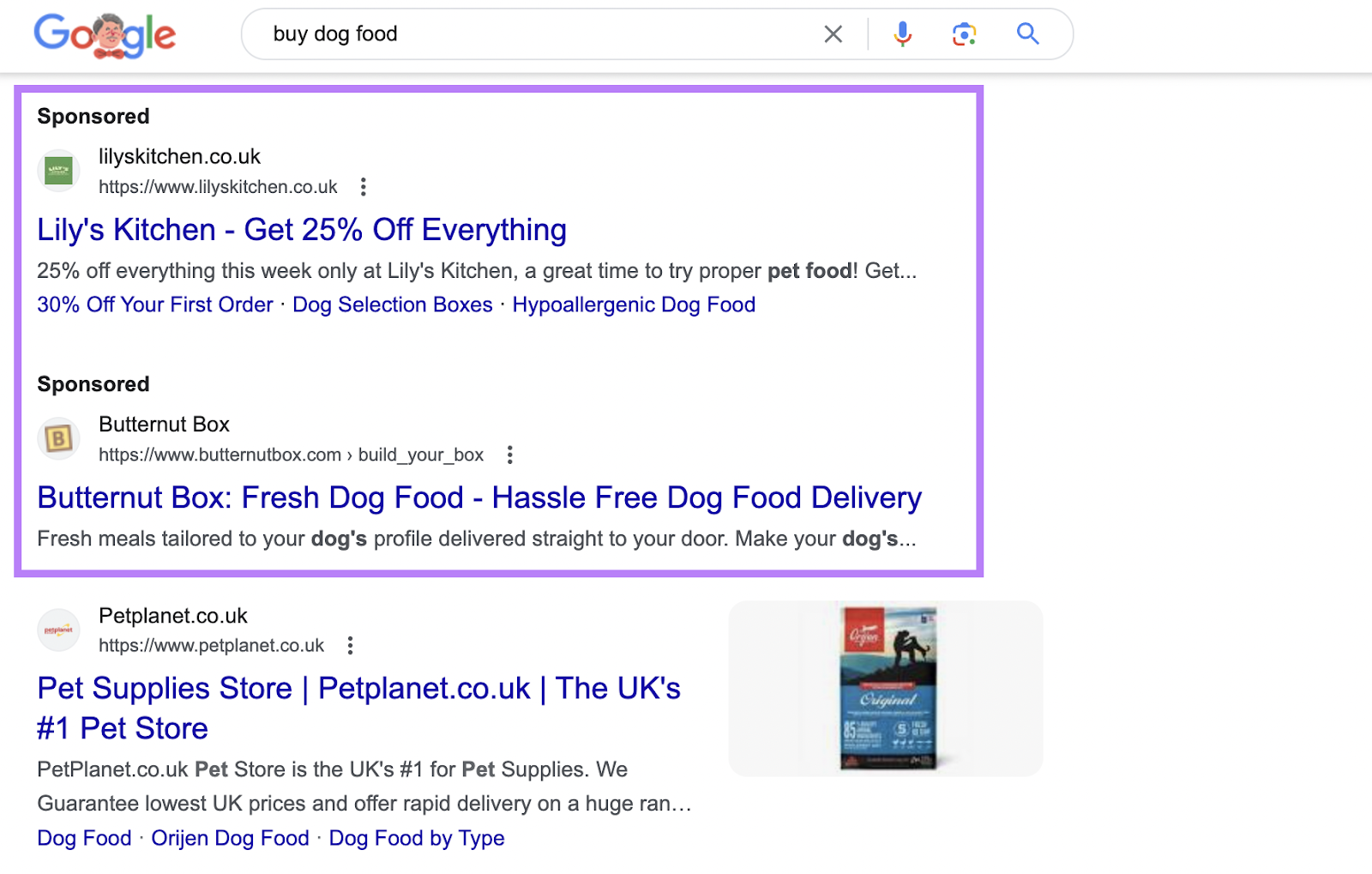
Sponsored Google Ad Example
So what's the takeaway, and what are the best use cases for running Google Ads? Essentially, local services, professional services, e-commerce stores, and companies offering products that are actively being searched for. One potential drawback is that competitive keywords can become expensive, as your ad spend is pitted against competitors with potentially deeper pockets in the same industry. This can lead to a spending war of sorts, where related businesses' only advantage is to outspend one another.
Our take: For businesses offering a service people are already looking for, Google Search Ads are often one of the first channels worth testing.
Key features:
Search ads targeting relevant keywords
Shopping ads displaying products and prices
YouTube video advertising
Display advertising across websites and apps
Performance Max campaigns using automated optimization across Google channels
Best use cases:
Local service businesses: Plumbers, electricians, HVAC companies, and contractors looking to reach customers actively searching for services in their area.
Professional services: Law firms, accounting firms, dental offices, and other professionals targeting customers with specific needs.
E-commerce stores: Online retailers using Google Shopping Ads to showcase products, prices, and availability to potential buyers.
Restaurants and local businesses: Businesses looking to attract nearby customers searching for specific products, services, or places to visit.
High-intent lead generation: Businesses offering specialized services or expensive products where customers typically research options before making a purchase.
Meta Ads: Build Brand Awareness and Generate Demand
Meta Ads
If your goal is to reach new customers, build brand awareness, and generate interest in your products or services, then Meta Ads may be one of your best options. Unlike Google, where customers are actively searching for something, Meta allows businesses to reach potential customers as they scroll through Facebook and Instagram. Meta uses information such as user interests, behaviors, and engagement to help serve ads to audiences that may be interested in what your business has to offer.
Think about the last time you were scrolling through Facebook or Instagram and came across a product you didn't even know existed. Maybe it was a new restaurant in your area, a clothing brand with an interesting collection, or a kitchen gadget that suddenly seemed like something you needed. You weren't necessarily looking for any of these things, but the advertisement caught your attention. These moments are prime opportunities for businesses to introduce their products and services to potential customers.
This type of advertising is often referred to as demand generation, meaning you're creating interest in a product or service rather than simply responding to an existing search. Having your business, product, or service appear naturally within someone's social media feed is an excellent way to introduce your brand, encourage engagement, and potentially turn casual browsers into paying customers.
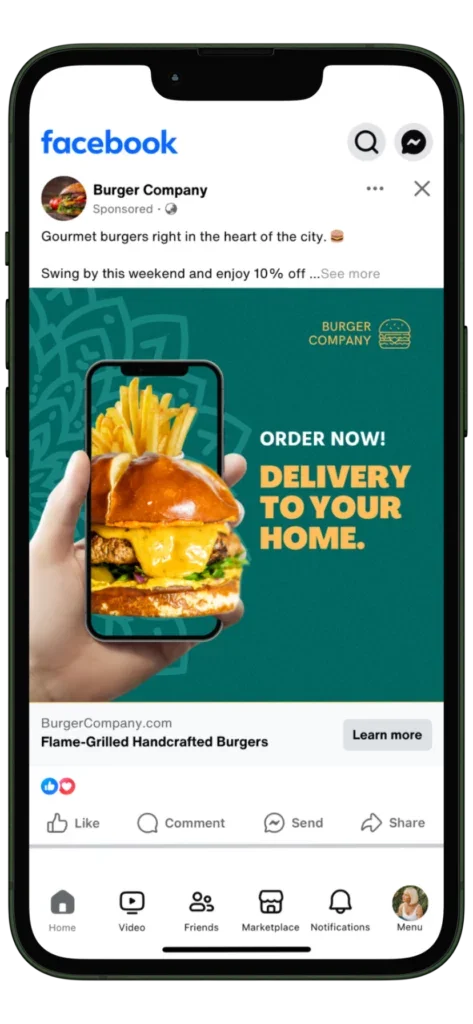
So then what are the best use cases for running Meta Ads? Essentially, restaurants, clothing brands, beauty businesses, local retailers, e-commerce stores, and companies offering visually appealing products or services. One potential drawback is that users aren't necessarily looking to make a purchase when they encounter your ad. This means your ad must work harder to capture their attention and convince them that your product or service is worth buying. Businesses also compete for limited advertising space, making strong visuals, engaging content, and effective targeting especially important. In contrast with google, this platform will reward strong visuals and creative strategies as well as ad spend.
Our take: For businesses looking to build awareness, introduce products to new audiences, and generate sales through visually engaging advertisements, Meta Ads are often one of the first platforms worth testing.
Key features:
Facebook and Instagram image, video, and carousel advertisements
Stories and Reels advertising placements
Product catalog ads displaying products from your online store
Audience targeting and automated campaign optimization
Retargeting ads to reach previous website visitors and engaged users
Lead generation forms for collecting customer inquiries
Meta Pixel and Conversions API for tracking website activity and conversions
Best use cases:
Restaurants and local businesses: Restaurants, cafés, salons, and other local establishments looking to introduce their offerings, promote specials, and attract nearby customers.
Clothing and lifestyle brands: Fashion retailers, accessory brands, and boutiques using engaging images and videos to showcase their products and collections.
Beauty and wellness businesses: Skincare brands, spas, fitness studios, and beauty professionals looking to build awareness and generate interest through visual content.
E-commerce stores: Online retailers using product catalogs, retargeting, and conversion-focused campaigns to promote products and encourage purchases.
Events and promotions: Businesses advertising seasonal sales, grand openings, special events, and limited-time offers to relevant audiences.
Lead generation: Service-based businesses using Facebook and Instagram advertisements to collect inquiries, appointment requests, and potential customer information.
TikTok: The King of Social Commerce and Influencer Marketing
If your goal is to reach new audiences, collaborate with content creators, and turn product discovery into direct sales, TikTok may be one of your best options. Much like Meta, TikTok allows businesses to reach users who aren't necessarily searching for a product or service. However, TikTok distinguishes itself through its emphasis on social commerce, creator partnerships, and interactive shopping experiences.
Think about the last time you saw someone demonstrating a clever kitchen gadget, reviewing a skincare product, or showcasing something interesting during a livestream. Maybe you weren't looking to purchase anything, but the demonstration caught your attention. With TikTok Shop, customers can discover products and purchase them directly within the app, sometimes without ever visiting an external website.
What really sets TikTok apart is how closely it integrates content creation, influencer marketing, and e-commerce. Through TikTok Shop, businesses can sell products directly through shoppable videos, product showcases, and LIVE shopping sessions. Even more interestingly, businesses can collaborate with creators through TikTok Shop's affiliate program, allowing influencers to promote products to their own audiences and earn commissions on qualifying sales. This creates opportunities for brands to generate sales through content they didn't necessarily have to produce themselves.
TikTok's LIVE shopping capabilities take this a step further. Businesses and creators can host interactive livestreams, demonstrate products, answer questions, and offer promotions while viewers shop in real time. This combines elements of traditional retail, influencer marketing, and entertainment into a single shopping experience.
Our take: If your business sells physical products that can be demonstrated, reviewed, or promoted by creators, TikTok offers a particularly compelling opportunity. Its combination of in-app shopping, affiliate partnerships, and live selling makes it more than just another social media advertising platform.
Key differences compared to Meta Ads:
Integrated social commerce: While Meta offers product catalogs and shopping advertisements, TikTok Shop integrates product discovery, promotion, and checkout directly into the content experience.
LIVE shopping: TikTok allows businesses and eligible creators to sell products during interactive livestreams, giving customers opportunities to ask questions, see demonstrations, and make purchases in real time.
Creator affiliate marketplace: TikTok Shop connects sellers with eligible creators who can feature their products in videos and livestreams, earning commissions on resulting sales.
Commission-based collaborations: Instead of relying exclusively on paid advertising or upfront influencer sponsorships, businesses can establish affiliate partnerships where compensation is tied to qualifying sales.
Shoppable creator content: Products can be featured in videos published by creators, allowing businesses to reach audiences beyond their own followers while connecting those recommendations directly to checkout.
Best use cases compared to Meta Ads:
Choose TikTok for influencer-driven sales: If your products would benefit from reviews, demonstrations, or recommendations from content creators, TikTok Shop's affiliate ecosystem provides built-in opportunities to establish these partnerships.
Choose TikTok for LIVE selling: If your business can demonstrate products, answer customer questions, or offer exclusive deals during livestreams, TikTok provides an interactive shopping experience that goes beyond traditional advertisements.
Choose TikTok to expand through collaborations: If you want other creators to promote your products without producing every advertisement yourself, affiliate partnerships can help extend your reach through their existing audiences.
Choose Meta for traditional advertising flexibility: If your strategy relies on static product images, carousel advertisements, website retargeting, or generating leads for services, Meta may provide a more practical starting point.
Consider both for e-commerce: Meta can help drive traffic to your website and reconnect with interested shoppers, while TikTok Shop creates additional opportunities to generate sales through creators, livestreams, and in-app purchases.
Pinterest Ads: Visual Search Meets Inspiration
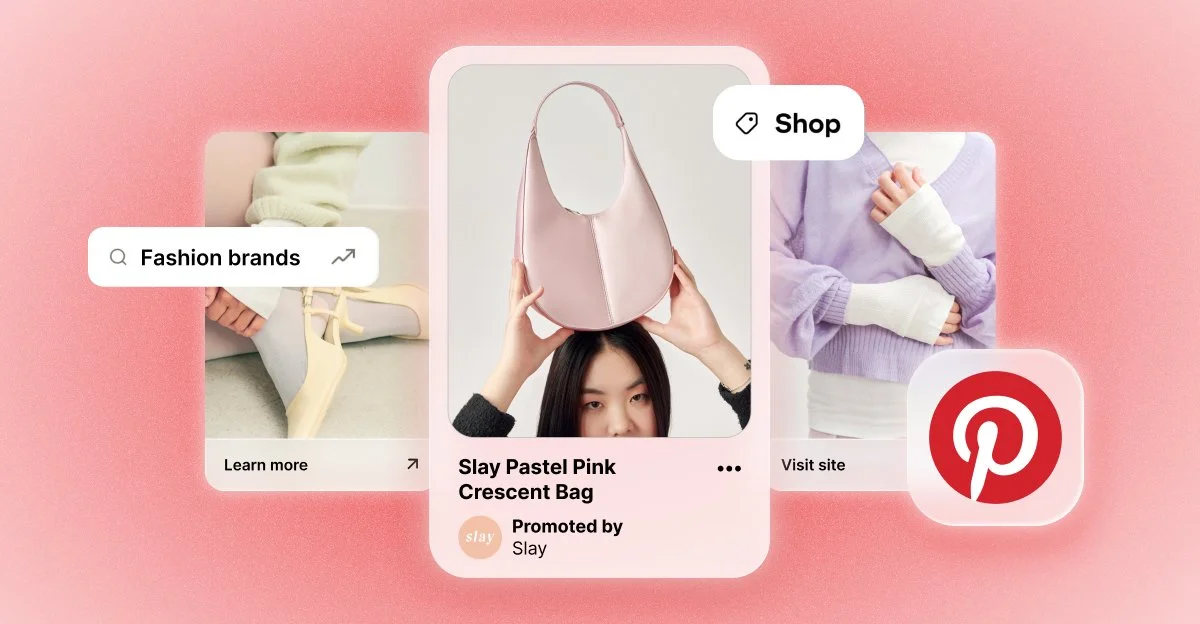
If your goal is to reach customers who are actively searching for inspiration, researching products, or planning future purchases, Pinterest Ads may be an excellent option. Unlike traditional social media platforms, Pinterest functions much more like a visual search engine, allowing users to discover products, explore ideas, and save content they find interesting.
Think about the last time you were planning a home renovation, looking for outfit ideas, or searching for the perfect gift. You might not have known exactly what product you wanted, but you had a general idea of what you were looking for. On Pinterest, users can search for things like "modern kitchen ideas," "fall wedding decorations," or "minimalist home office setups" and discover images, products, and businesses related to those interests.
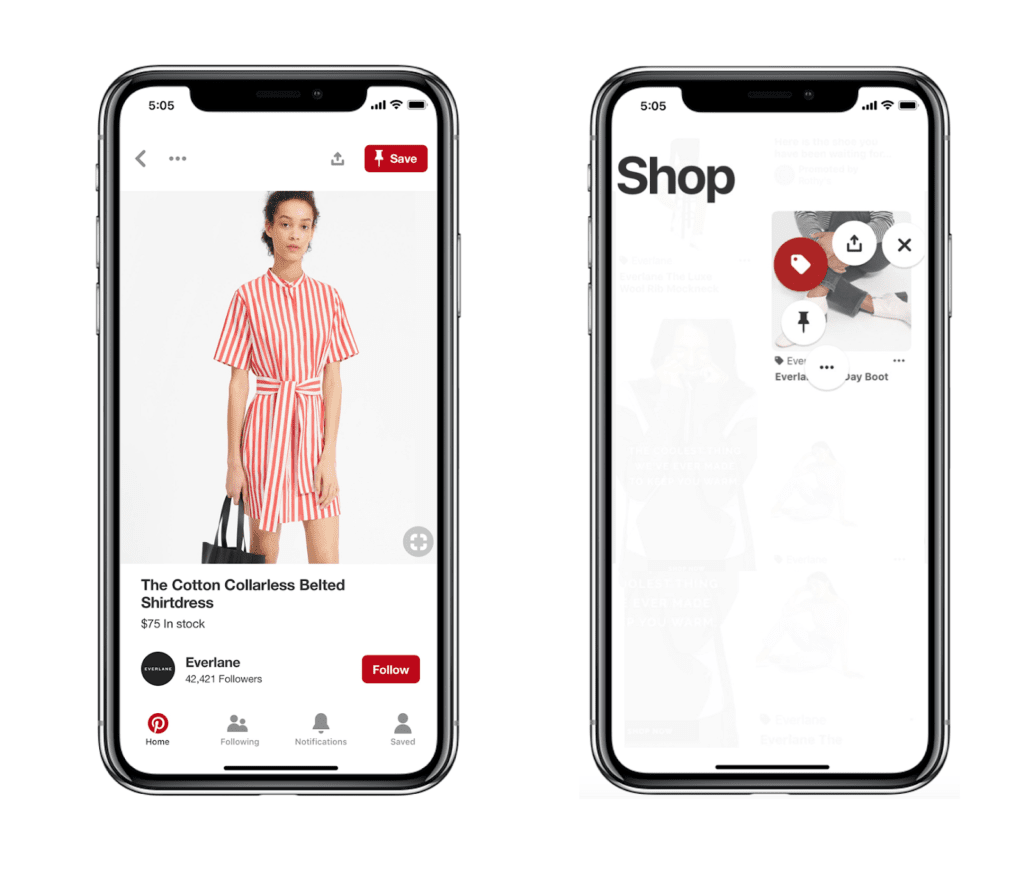
This is where Pinterest really shines. Unlike Meta and TikTok, where advertisements frequently interrupt passive scrolling, Pinterest allows businesses to reach customers through visual searches and intentional discovery. Users are often actively looking for inspiration, even if they haven't settled on a specific product or brand. Pinterest Ads can place your products directly among the ideas they're already exploring.
Another interesting advantage is the longevity of content. While posts on traditional social media platforms often lose visibility relatively quickly, Pins can continue appearing in search results and recommendations long after they're published. This creates opportunities for businesses to build an organic presence alongside their paid advertising efforts.
Our take: If your business offers visually appealing products or services that customers typically research, compare, or plan for, Pinterest is worth considering. Its combination of visual search, product discovery, and long-term content visibility makes it particularly attractive for businesses looking to reach customers earlier in their purchasing journey.
Key features:
Visual search advertising: Promote products and content alongside relevant Pinterest searches, reaching users actively exploring specific ideas or interests.
Shopping ads and product catalogs: Connect your online store's products to Pinterest, allowing users to discover items with product images, pricing, and links to purchase.
Interest and keyword targeting: Reach audiences based on topics they're interested in and terms they're searching for.
Visual discovery feeds: Advertisements can appear naturally among Pins and recommendations, introducing products as users browse related ideas.
Evergreen content opportunities: Organic Pins can continue generating impressions and website traffic over time, complementing paid campaigns.
Best use cases:
Businesses with visually appealing products: If your products can be showcased through attractive photography, lifestyle imagery, or creative presentations, Pinterest provides an environment built around visual discovery.
Products customers research before purchasing: If customers typically explore ideas, compare styles, or save inspiration before buying, Pinterest allows you to reach them during that planning process.
Businesses targeting specific interests or aesthetics: If your products appeal to particular styles, hobbies, or lifestyles, Pinterest's keyword and interest targeting can help connect them with relevant audiences.
Businesses with evergreen content: If you already create blog posts, tutorials, guides, or inspirational imagery, Pinterest can help extend the reach of that content beyond traditional social media.
E-commerce stores looking for additional discovery channels: If you're already advertising through Google or Meta, Pinterest can complement those campaigns by introducing your products to customers who are still exploring their options.
LinkedIn Ads: Reach Professionals and B2B Clients
If your goal is to reach business owners, executives, industry professionals, or decision-makers within specific companies, LinkedIn Ads may be one of your strongest options. Unlike Google, Meta, and TikTok, LinkedIn focuses on professional networking, giving advertisers opportunities to reach audiences based on their job titles, industries, companies, and professional experience.
Think about a software company trying to sell an expensive inventory management system. Rather than advertising to thousands of general consumers, that company might want to reach operations managers, purchasing directors, or executives responsible for making purchasing decisions. With LinkedIn Ads, businesses can target these professional audiences directly, placing advertisements in front of people who are more likely to have a say in purchasing their products or services.
This makes LinkedIn particularly valuable for business-to-business (B2B) advertising. Instead of reaching as many people as possible, the goal is often to reach a smaller, more qualified audience. LinkedIn also supports lead generation forms, allowing interested professionals to submit their information directly through an advertisement.
One potential drawback is cost. LinkedIn advertising can be considerably more expensive than other platforms, especially when targeting competitive professional audiences. However, for businesses offering high-value services or products, generating even a handful of qualified leads may justify the additional expense.
Our take: If your business sells products or services to other businesses, particularly those involving larger contracts or longer sales cycles, LinkedIn Ads can be an excellent way to reach the people responsible for making purchasing decisions.
Key features:
Professional audience targeting: Reach users based on job titles, industries, company size, seniority, and other professional characteristics.
Account-based marketing: Target employees at specific companies you want to work with.
Lead generation forms: Collect inquiries and contact information directly within LinkedIn.
Sponsored content: Promote articles, videos, documents, and advertisements within professional feeds.
Website conversion tracking: Measure leads and other actions generated through your campaigns.
Best use cases:
Businesses targeting other businesses: If your products or services are primarily purchased by companies rather than individual consumers, LinkedIn provides access to relevant professional audiences.
High-value products and services: If a single customer could represent thousands of dollars in revenue, LinkedIn's potentially higher advertising costs may be easier to justify.
Reaching specific decision-makers: If you need to connect with executives, managers, or professionals in particular industries, LinkedIn offers targeting capabilities that general social platforms don't emphasize.
Businesses with longer sales cycles: If customers typically require consultations, demonstrations, or multiple conversations before purchasing, LinkedIn can help generate qualified leads and build relationships.
Companies pursuing specific accounts: If you already know which organizations you'd like to work with, LinkedIn's company targeting can support campaigns aimed at those businesses.
Microsoft Ads: An Overlooked Alternative to Google Ads
If your goal is to reach customers who are actively searching for products or services while exploring potentially less competitive advertising opportunities, Microsoft Ads may be worth considering. Much like Google Ads, Microsoft Advertising allows businesses to target specific keywords and display advertisements alongside relevant search results. The primary difference is that Microsoft Ads reaches users through Bing and Microsoft's broader search advertising network, rather than Google's search engine.
Think about the last time you searched for something using Microsoft Edge or the search bar built into your Windows computer. Depending on your browser and search settings, you may have been using Bing without giving it much thought. Millions of people use Microsoft's search services, creating additional opportunities for businesses to reach potential customers beyond Google.
One potential advantage is advertising competition. Because Google dominates much of the search advertising market, some businesses may find less competition for certain keywords through Microsoft Ads. This can sometimes translate into lower advertising costs, although actual pricing depends on the industry, audience, and keywords being targeted.
Another advantage is how easily Microsoft Advertising can complement an existing Google Ads strategy. Businesses can import compatible Google Ads campaigns, making it relatively straightforward to experiment with another search platform without rebuilding everything from scratch.
Our take: If you're already seeing success with Google Ads, Microsoft Advertising is worth testing as an additional source of high-intent traffic. It offers many familiar advertising tools while potentially reaching customers and audiences you aren't capturing through Google alone.
Key differences compared to Google Ads:
Different search audience: Microsoft Ads reaches customers through Bing and eligible search partners, providing access to users outside Google's search ecosystem.
Potentially lower competition: Depending on your industry, certain keywords may have fewer competing advertisers, potentially resulting in lower costs per click.
LinkedIn profile targeting: Microsoft Advertising supports certain LinkedIn-based targeting options, such as company, industry, and job function, for eligible campaigns.
Campaign importing: Businesses can import compatible campaigns directly from Google Ads, simplifying the process of expanding into Microsoft Advertising.
Search volume: Google generally provides access to a larger search audience, while Microsoft Ads can offer additional reach that complements existing campaigns.
Best use cases compared to Google Ads:
Choose Microsoft Ads to expand successful campaigns: If your Google Ads campaigns are already producing results, Microsoft Advertising provides another opportunity to reach customers searching for similar products or services.
Choose Microsoft Ads to explore potentially lower advertising costs: If competitive keywords are making Google Ads expensive, testing those same keywords on Microsoft may reveal additional opportunities.
Consider Microsoft Ads for professional audiences: If your products or services appeal to specific industries or business professionals, Microsoft's LinkedIn profile targeting options may provide additional value.
Choose Google Ads for broader search reach: If your priority is reaching the largest possible audience of active searchers, Google Ads will generally be the stronger starting point.
Consider both for search advertising: If your business depends on capturing customers who are actively searching, running campaigns across both platforms can help diversify your search traffic and uncover additional opportunities.
Finding the Right Advertising Platform for Your Business
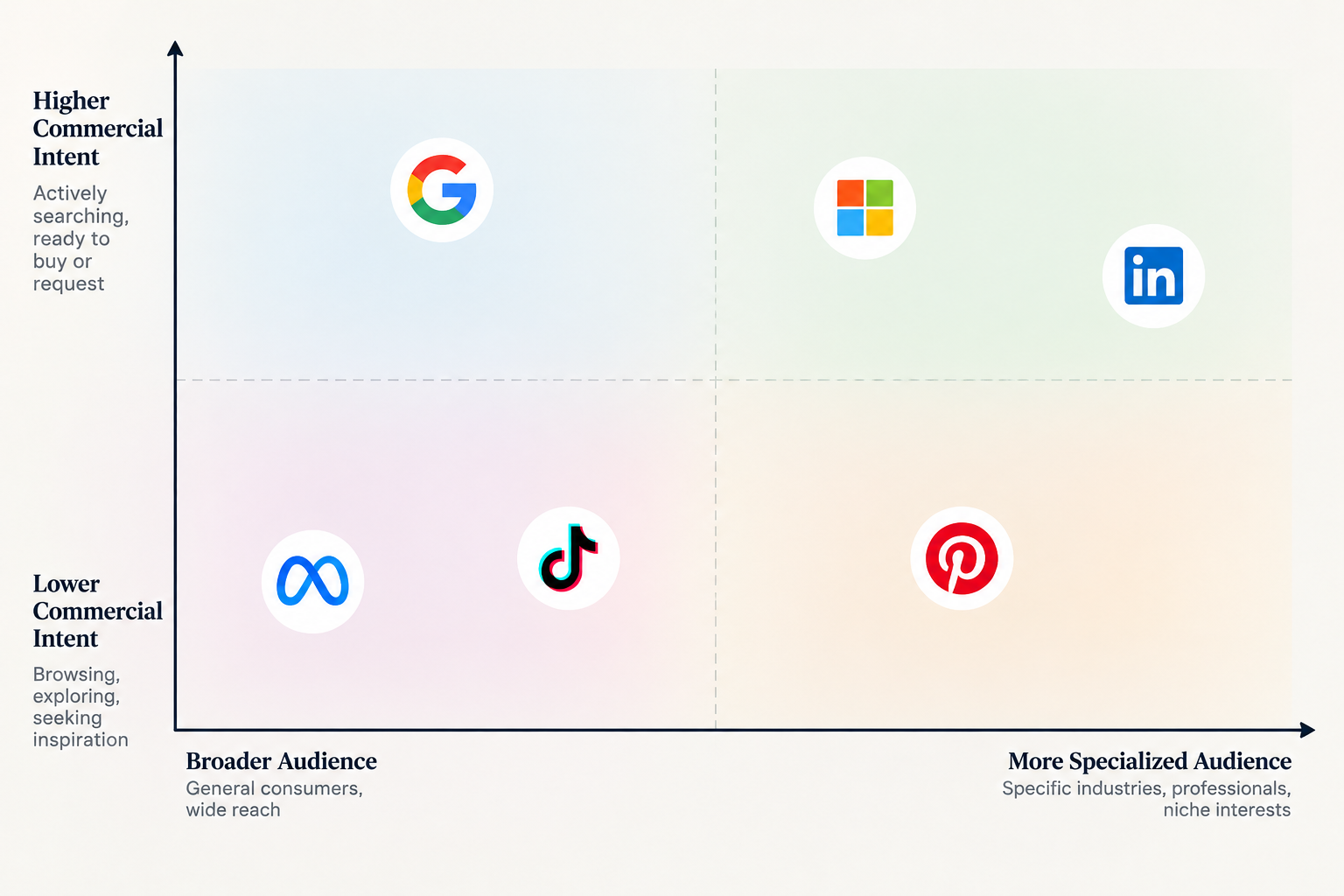
Ultimately, the best advertising platform depends on your business goals, target audience, and where your customers are in their purchasing journey. Google and Microsoft Ads excel at capturing existing demand from customers actively searching for products or services, while Meta and TikTok focus on generating interest through social discovery. Pinterest bridges the gap between inspiration and purchase intent through visual search, while LinkedIn specializes in reaching professional audiences and business decision-makers. The chart below illustrates how these platforms generally compare in terms of commercial intent and audience targeting, helping you identify which channels may be the best fit for your advertising strategy. Keep in mind that these are general tendencies, and each platform can serve multiple stages of the customer journey.