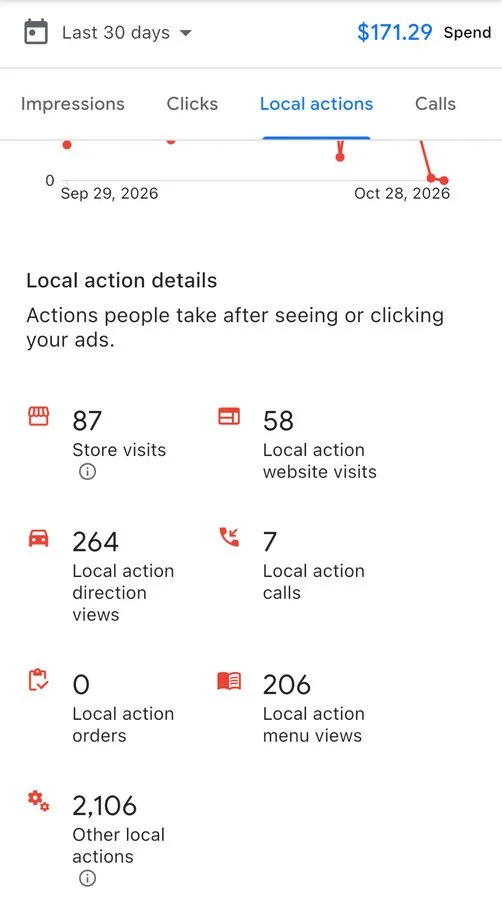
The Results: $6 a Day, 90 Store Visits per Month - an Estimated $1,800 in Revenue
What can $6 a day in Google Ads actually earn a small business? For one of our local bakery clients, that modest $170 monthly advertising budget generates approximately 90 Google reported in store visits per month. Assuming an average in store purchase of $20, based on sales data, that's an estimated $1,800 in monthly revenue from just $170 in ad spend. That adds up to a roughly 10.7× return on advertising spend! And that's before accounting for repeat purchases, larger orders for catering, or customers who discover the bakery through an ad and return later. So how do we squeeze that much value out of just $6 a day?
Strategy #1: Advertise During the Hours That Matter
Not every hour of the day offers the same opportunity to bring customers through the door. That's why our bakery’s ads don't run around the clock. Instead, we schedule advertising exclusively during selected business hours, and even then limit it to the most likely times someone will actually visit. This means we focus our hours more on mornings, weekends, and some evenings, all depending on the data. Mondays generally tend to have less traffic, and weekends tend to make up the bulk of traffic, so we choose to concentrate the ad spend on those days.
For example, someone searching for a bakery while deciding where to stop for breakfast or an afternoon treat may be more likely to visit immediately than someone browsing late at night. While customer behavior varies, the principle is simple: advertising should align with the times customers are most likely to take action.
Strategy #2: Keep It Local with a Radius that Makes Sense
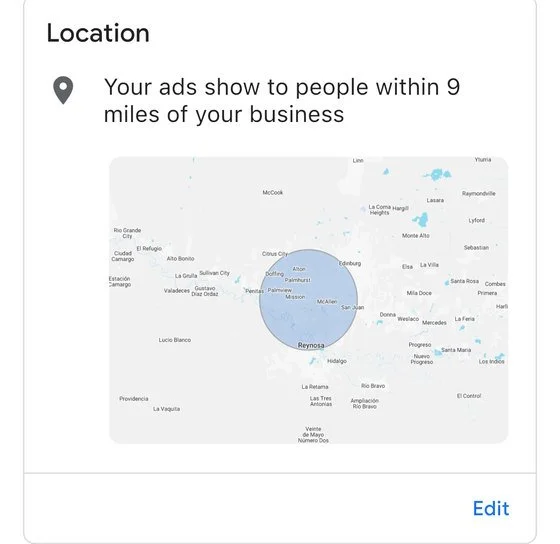
With only $6 to spend each day, geographic targeting matters. Rather than advertising across the entire metro area, we restrict the campaign to a 9 mile radius around the location. This concentrates spending on nearby customers who are more likely to visit, rather than paying for traffic from people who may be too far away to make the trip. A smaller, more relevant audience helps us make better use of every advertising dollar.
For a local storefront, proximity plays a major role in whether someone actually visits. A person searching for a bakery just a few miles away is more likely to make the trip than someone on the opposite side of the region. Expanding the targeting area might generate more impressions and clicks, but who is actually willing to travel 30 or even 15 miles to your location when there may be other alternatives much closer? This is wasted ad spend. The goal isn’t maximum reach, it’s maximum relevance. By keeping the targeting area focused, we give our limited daily budget a better opportunity to generate meaningful local activity instead of paying for unnecessary exposure.
We continually refine the schedule rather than simply running ads during every hour the business is open. With a budget of just $6, concentrating spending during promising hours can make a meaningful difference in how effectively that money is used.
Strategy #3: Stop Paying for Branded Searches - Exclude Your Business’ Name
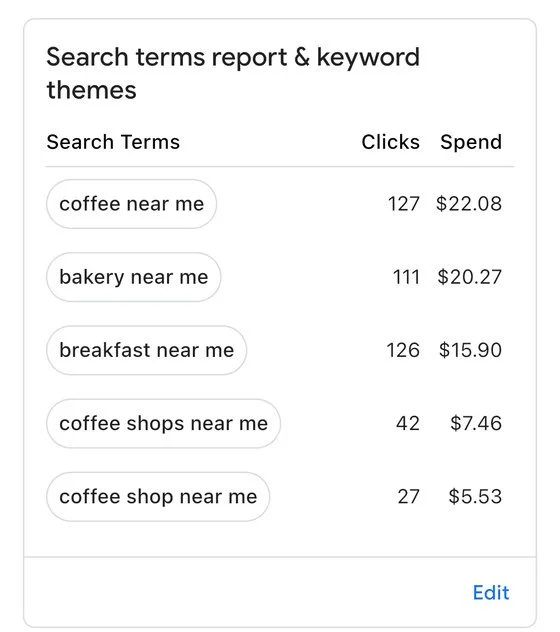
One of our more deliberate optimizations was excluding "La Concheria Cafe"—the business in question—as a search term from the campaign.
Why exclude the name of the very business we're advertising? Because someone searching specifically for that business already knows it exists and are likely looking for directions, checking business hours, or planning a visit they were already going to make.
Instead, we want our limited advertising budget focused on people searching for products or businesses they haven't necessarily discovered yet. Searches such as "bakery near me," "Mexican sweet bread," or "breakfast near me" represent opportunities to introduce our client to customers actively looking for what it offers.
This distinction between branded and non-branded searches is especially important for smaller budgets. While branded advertising has its place, our priority for this campaign is customer discovery rather than paying for existing brand recognition. Excluding branded searches doesn't guarantee that every resulting visit comes from a new customer, but it helps direct more of the budget toward people who may not have found the bakery otherwise.
Strategy #4: Small Budgets Still Need Active Management
A common misconception is that small advertising budgets don't require much management. In reality, the smaller the budget, the more important it becomes to avoid unnecessary spending.
We regularly monitor search terms, geographic performance, advertising schedules, and conversion data. If certain searches aren't relevant to the bakery, they can be excluded. If particular hours consistently perform better, we can adjust the schedule to prioritize them. If the targeting area needs refinement, we can make those changes based on campaign performance.
These adjustments aren't necessarily dramatic, but they add up. With only $6 available each day, even a few dollars spent on irrelevant searches or poorly timed advertisements can represent a substantial portion of the budget.
Rather than focusing exclusively on clicks or impressions, we prioritize results that matter to a physical business: getting potential customers through the door. The campaign's approximately 90 monthly Google-reported store visits provide a useful measure of that objective.
The Bottom Line: Spend Smarter, Not Necessarily More
Our client’s campaign demonstrates what a carefully managed local advertising budget can potentially accomplish. With approximately $170 in monthly advertising spend, 90 Google-reported store visits, and an estimated $1,800 in associated purchase revenue, the numbers illustrate how even a modest investment can amount to meaningful business activity.
Of course, actual revenue attributable to the ads depends on how many visits are additional customers, how much those customers spend, and whether they return. The underlying strategy remains valuable regardless of budget: focus on nearby customers, advertise during productive hours, eliminate unnecessary searches, and continuously optimize performance.
For small businesses, successful advertising doesn't always start with a bigger budget. Sometimes, it starts with making better use of the $6 you're already spending.